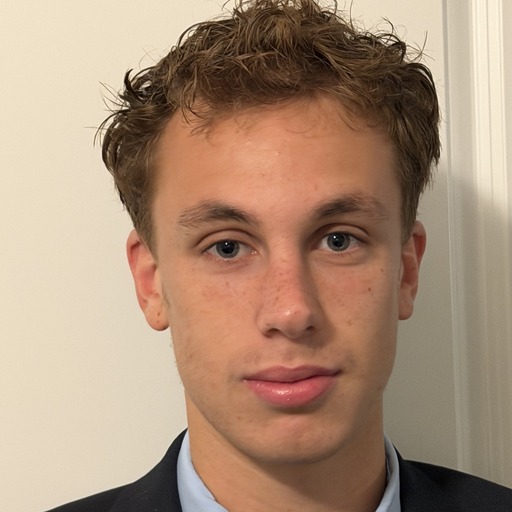
I am a high school student with a strong interest in applied mathematics and in the analysis of complex, real-world data. Since 2025 I have contributed to the computational analysis of a breast cancer research project in the Zhang Lab at the University of Toledo, where I work on turning large volumes of raw measurement into results the lab can rely on.
I am especially interested in the structure within complex data, and in how the individual parts of a system relate to one another. This is what draws me to network analysis and, more broadly, to problems that are answered through careful quantitative reasoning rather than through collecting more data.
My work focuses on making large, complex gene-expression datasets interpretable. It spans three connected stages: standardizing the measurements and linking each gene to established biological knowledge resources; distinguishing human tumor signal from mouse background in models where human tumors are grown in mice; and, increasingly, analyzing genes as networks to understand why a tumor behaves as it does, not only which genes change.
This analysis supports a study of why certain breast cancers recur in the lung, described in the conference abstract below.
Open-source research software I have developed, from analyzing gene-expression data to measuring how cancer cells grow and survive under different conditions.
A toolkit I developed for analyzing targeted RNA sequencing data. It removes cross-species contamination, standardizes and compares gene-expression measurements, and is fully documented, validated against an independent analysis, and archived with a citable DOI for reuse.
Software I developed to measure cell colonies from flatbed scans of stained laboratory plates. It locates each well, identifies and counts the colonies, measures their size and staining, and produces the statistics and a report automatically, in place of slow and subjective manual counting. Documented, tested, and archived with a citable DOI.
Chenchik A, Frangou S, Kobzik L, Zhang J. A tissue-dependent tumor-cell gene expression program in breast cancer is associated with lung relapse. Abstract submitted to the American Association for Cancer Research (AACR) Annual Meeting 2027, Orlando, FL.